Rent collection engine
Scheduled charges, autopay mandates, partial payments, and late-fee rules handled as an auditable ledger.
AI-Built Buildium Clone
An AI-first build of every Buildium mechanic: arrears prediction that flags trouble before late fees, maintenance triage that prioritizes tickets by severity, and rent pricing suggestions grounded in portfolio data. Four synced panels ship white-label with 100% source code, owned by you from day one. The almost-ready AI build goes live in 6 working days; a custom build takes 3 to 4 weeks.
Launch-ready from
$5,199
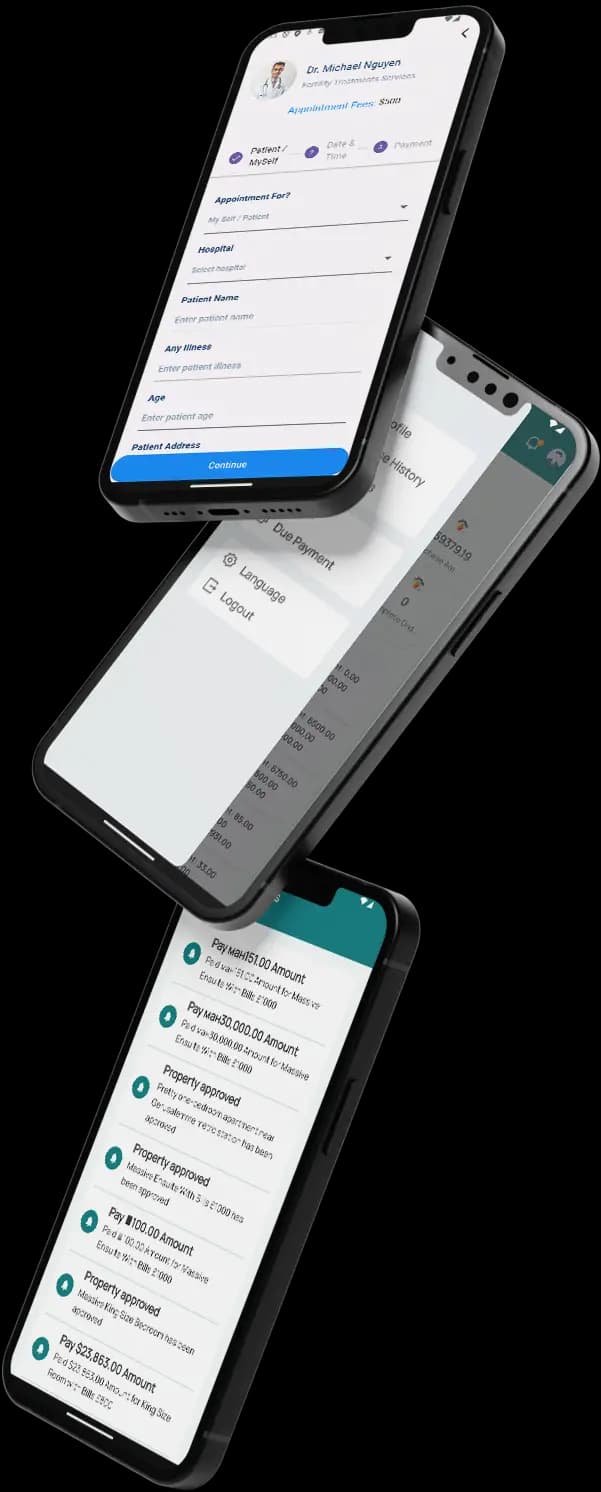
Synced Panels
Almost-ready AI launch
Custom build
Source-code ownership
Trusted by the brands we build for



Canonical facts, not promises.
overview
Property management software is the operating system for landlords and management companies: it tracks units and leases, collects rent, runs maintenance from report to resolution, and reports income to owners. The Buildium-style model is a full-cycle suite, covering everything from tenant applications to year-end owner statements.
The purpose is to replace spreadsheets, email chains, and bank reconciliations with one auditable ledger and one workflow engine. Operators launch this kind of platform as a SaaS business because property managers pay monthly per unit, churn is low once a portfolio is loaded, and the accounting core is a genuine switching cost.
A complete build includes the tenant portal and app, the property manager console, an owner portal, and an accounting and admin panel, with rent collection, ticketing, vendor dispatch, and reconciliation designed in from the start.
Property management software is a mature, growing category, with global players and many regional incumbents, and buyers routinely switch when a platform handles their local payment rails or trust-accounting rules better. Hedge any market figure you read; the durable fact is that landlords adopt software that survives an audit.
The headline layer above the panels.
Scheduled charges, autopay mandates, partial payments, and late-fee rules handled as an auditable ledger.
State-machine work orders from resident report through triage, vendor dispatch, approval, and closure, with photo evidence and SLA timers.
Flags tenancies likely to fall behind from payment history and signals, so payment plans start before the arrears do.
Prioritizes maintenance tickets by severity and SLA risk so managers work the queue in the right order.
Application intake wired for third-party screening providers, with consent and adverse-action records kept.
Scheduled net-income calculations and payout runs with downloadable statements per owner.
Checklist-based move-in, routine, and move-out inspections with timestamped photos attached to the unit record.
Double-entry ledger with property-level tagging, reconciliation, and trust-accounting discipline designed in.
What these buyers share: portfolios worth automating and a reason regional fit beats the global incumbents.
Attacking markets where incumbents price in foreign currency and landlords need local payment rails and lease templates.
Productizing internal tooling that already runs their units, then selling it to peers as a SaaS line.
Adding a white-label platform to their practice and billing implementation and migration on top of the software.
Serving real estate clients with a branded suite delivered in weeks instead of a ground-up build.
Running a platform for members under the group's own brand, keeping subscription revenue in the community.
Four products operating as one system. Every panel ships in every build.
Self-service that cuts property manager phone time.
The day-to-day cockpit for portfolios of any size.
Transparency that retains landlords.
Trust-accounting discipline built in.
Four consoles, one view of the portfolio's money, maintenance, and risk.
General ledger with property tags, rent roll and delinquency reports, AI arrears prediction dashboards, owner distribution runs, and reconciliation tools built for month-end close and trust-accounting audits.
Vendor invoice processing, work-order dispatch and SLA timers, photo-evidence review at each stage, and vendor performance analytics, so service response times stay visible and defensible.
Agent-tier administration, listing moderation queues, lease and document management with e-signature tracking, and legal and compliance tooling that keeps portfolios audit-ready.
Role-based permissions, audit trail on every entry, geographic coverage settings, revenue reporting with CSV and API exports, and AI demand and price intelligence dashboards.
The tenant and portfolio journey your revenue rides on, step by step.
A vacant unit is syndicated to listing sites, prospects apply in the tenant portal, and screening checks run against the application.
Approved applicants receive the lease for e-signature, with deposits and move-in dates written into the tenancy record.
An inspection checklist is completed, the deposit is recorded, and a rent ledger opens for the tenancy.
Autopay charges the tenant on schedule; late fees apply per lease terms and the ledger reflects every payment and charge.
Tenants submit requests with photos; the ticket is triaged, dispatched to vendors with approval limits, and tracked to closure.
Income, expenses, and reserve movements roll up into monthly owner statements generated from the same ledger.
Five model-driven systems working the same portfolio data. Each ships pre-tuned for property management and sharpens as your data compounds.
Ranks tenancies by likelihood of missed rent from payment history and engagement signals, before the late fee applies.
Payment history, ledger balances, tenure, communication patterns
Payment plans that start early instead of evictions that start late
Prioritizes tickets by severity, habitability risk, and SLA exposure so the queue works itself into the right order.
Ticket text, photos, unit history, vendor availability
Faster response on what matters and fewer breached SLAs
Suggests market-aligned rents at renewal from local comps and portfolio performance, which managers accept or adjust.
Local comps, occupancy, unit attributes, renewal history
Renewal revenue that tracks the market without guesswork
Recommends the right vendor per trade, rating, and availability, with performance tracked per completed work order.
Vendor history, trade, ratings, cost and completion data
Dispatch decisions that stop margin leakage
Explains which properties, managers, and cost lines drive performance, in language owners read.
Ledger entries, maintenance costs, occupancy, delinquency
Owner conversations grounded in the same numbers you run on
platform concepts
The first concept is the rent ledger as the product's spine. Every charge, payment, late fee, and adjustment posts as a dated entry tied to a tenancy, and delinquency is computed from it rather than guessed. That is what makes owner statements trustworthy and year-end reporting an export instead of a project.
The second is SaaS economics. Subscriptions tier by unit count, per-transaction fees apply to online rent payments where your market allows, and add-on modules such as screening and advanced reporting gate the higher tiers. Every tier, fee, and module flag is admin-configurable, so pricing experiments never need a code release.
The third is the unit and lease catalog. Properties, units, leases, and tenants live in one structured record that the ledgers, tickets, and inspections all reference, and maintenance runs on a ticket lifecycle whose states carry their own permissions and notifications. Nothing about a unit lives outside a record.
Four groups, each mapped to the part of the property-management promise it protects.
Listing syndication with vacancy tracking, applications with AI tenant matching and screening, e-signature lease agreements, and lease renewals with expiration tracking, so occupancy is engineered rather than hoped for.
Online rent collection with autopay mandates, automated invoicing and late-fee calculations, a double-entry ledger with property-level tagging, and owner distribution runs with reconciliation for month-end close.
Online maintenance requests with state-machine work orders, vendor management and dispatch, predictive maintenance alerts, and photo evidence at each stage, keeping service response times visible.
Tenant and owner portals for payments, documents, and communication, automated notifications, integrated document management for lease agreements, and legal and compliance tooling that keeps portfolios audit-ready.
SaaS subscriptions tiered by unit count, billed monthly or annually per property manager account.
Per-transaction fees on online rent payments, or a payment-processing margin where your market allows.
Add-on modules: tenant screening, owner distributions, and advanced reporting sold as upgrades.
Vendor marketplace placement for maintenance contractors competing for dispatched work orders.
Every tier, fee, and module flag is admin-configurable, so pricing experiments do not need a code release.
insight
The property management software market is expected to exceed $26 billion by 2030 according to widely published industry analyses, driven by real estate digitalization: over 70% of property managers are adopting AI-powered solutions, and 85% of tenants prefer digital rent transactions. SaaS pricing tiers by unit count, so revenue compounds with portfolio growth on the platform.
The wedge for a new entrant is accounting-grade trust: a double-entry ledger with trust-accounting discipline, owner distributions, and arrears prediction that operators can defend to their accountants. The revenue table below quantifies the lines.
SaaS subscriptions tiered by unit count, billed monthly or annually per property manager account.
Per-transaction fees on online rent payments, or a payment-processing margin where your market allows.
Add-on modules: tenant screening, owner distributions, and advanced reporting sold as upgrades.
Vendor marketplace placement for maintenance contractors competing for dispatched work orders.
Every tier, fee, and module flag is admin-configurable, so pricing experiments do not need a code release.
Six monetization lines across the platform, quantified against published industry benchmarks. Every rate is admin-configurable; the figures here are modelling inputs, not projections of your platform's earnings.
| Criteria | Revenue line | How it is charged | Typical range | What sets the ceiling |
|---|---|---|---|---|
| SaaS subscriptions | Tiered by unit count, billed monthly or annually per manager account | PM software commonly $1 to $3+ per unit per month, or $50 to $1,500+ flat tiers | Portfolio size. Revenue compounds with units under management | |
| Payment processing | Per-transaction fees on online rent payments or processing margin | Commonly 1% to 3% per transaction or $2 to $5 flat per payment | Autopay adoption. Processing margin grows with digital rent adoption | |
| Tenant screening fees | Fees on application screening reports | Commonly $25 to $75 per applicant | Applicant volume. Screening earns at leasing velocity | |
| Add-on modules | Owner distributions, advanced reporting, and inspections sold as upgrades | Add-on pricing per module or bundled in higher tiers | Portfolio complexity. Larger portfolios need the advanced tiers | |
| Vendor marketplace placement | Placement fees for maintenance contractors competing for work orders | Per-lead or subscription pricing for vendors | Dispatch volume. Placement earns where work orders flow reliably | |
| Setup and onboarding fees | One-time data migration and onboarding fees | Commonly $300 to $2,000+ per onboarding | Portfolio migration effort. Larger migrations command larger fees |
Standard inclusions on every engagement, almost-ready or custom. Nine things you never have to ask for.
The complete unencrypted codebase transfers to you, with documentation and deployment scripts.
Your logo, colors, and store accounts across all four panels, plus branded tenant and owner communications.
App store and Play Console submissions handled end to end, with production monitoring switched on.
Stripe, PayPal, and regional gateways configured for rent collection, autopay, and subscription billing.
Arrears prediction, triage, and rent suggestions arrive configured for property management, not as raw APIs.
Languages, currencies, and tax display configured for your markets during the launch window.
Multi-tenant services on AWS or Azure with role-based access, encryption at rest, and audit logging.
Rent rolls, delinquency dashboards, and CSV exports so your operations team starts informed on day one.
Included support window plus product updates covering bug fixes, OS compatibility, and version upgrades.
Where generic scripts fail and we spend our effort.
Scheduled charges, autopay mandates, partial payments, and late-fee rules handled as an auditable ledger, so arrears disputes end with a report, not an argument.
State-machine work orders from resident report through triage, vendor dispatch, approval, and closure, with photo evidence and SLA timers at each stage.
Stripe, PayPal, and regional gateways covering cards and bank transfers, with reconciliation tooling built for month-end close.
Double-entry ledger with property-level tagging, owner distributions, and reconciliation, designed to satisfy trust-accounting audits.
Multi-tenant services on AWS or Azure with role-based access, encryption at rest, and full audit logging. See our real estate and proptech industry page for the wider practice.
Screening providers, listing syndication, and accounting exports ship as configured integrations, while encryption, role-based access, and audit trails come standard, so audit questions have answers before they are asked.
The almost-ready AI build, day by day. Store review times can add a short buffer outside our control.
Portfolio size, billing tiers, and payment gateways locked with a written scope, and your identity applied across all four panels.
Fee rules, late fees, roles, and payment gateways configured and tested against your live accounts.
Properties, units, leases, and tenants imported with balances, then a live test cycle: rent charge, payment, ticket, vendor dispatch, owner statement.
App store submissions with review buffers accounted for, production monitoring on, and full launch with post-launch support and product updates included.
Both tracks ship the same management core. The difference is time, price structure, and how much you want to change.
| Criteria | Almost-Ready AI Launch | Custom Build |
|---|---|---|
| Time to live | 6 working days from branding handoff | 3 to 4 weeks, scoped before work starts |
| Pricing | Fixed written quote after a short scoping call, no hourly meter | Estimated per module after the discovery call |
| Source code and IP | 100% ownership on delivery | 100% ownership on delivery |
| AI layer | Arrears prediction, triage, and rent suggestions pre-tuned for property management | AI services designed around your workflows and data |
| Accounting | Trust-accounting discipline engineered in | Plus jurisdiction-specific ledgers and reporting packs |
| Best for | Operators who want to launch this quarter | Teams with bespoke workflows or a unique model |
| After launch | Post-launch support and product updates included | Post-launch support and product updates included |
$ moxace launch --nowBook a walkthrough and we will run a rent charge, a ticket, and an owner statement live on the call, then send the written scope.
Share your idea
a quick call, no deck required
See the live demo
every screen, admin to user
Launch with source
full code, your brand, your servers
No two launches price the same. These are the factors that shape the written quote you receive after scoping.
The almost-ready AI build covers the proven feature set. Regional payment rails, screening integrations, or custom reporting packs add scoped estimate work.
Billing tiers, language packs, and currency setups are configured per market. Adding regions means more configuration, never a rebuild.
Screening providers, listing syndication, and accounting exports are wired during the build, and each integration is estimated individually.
Out of the box, arrears and pricing models are pre-tuned for property management. Training on your portfolio history is an optional, separately scoped workstream.
Extend the Buildium-style build once the core ledger is running.
Scores applicants against property and community fit from screening data and preferences, so vacancies fill with tenants who stay.
Predicts market trends, cash flow, and arrears from portfolio data, turning the ledger into forward-looking guidance for owners and managers.
Smart-contract lease agreements with tamper-evident terms, enhancing legal security and verification for markets that accept the format.
Unified messaging, automated reminders, and relationship history across tenants and owners, keeping every conversation attached to a record.
SEO-optimized property listings with syndication and lead capture, feeding the leasing pipeline that keeps occupancy high.
Deploy the platform for property management firms or franchise networks under their own brands, with per-tenant billing tiers and module configuration.
Ready-made speed with accounting-grade engineering.
Money movement is a double-entry ledger from day one, not a reporting afterthought bolted onto invoices.
A ready-made launch costs a fraction of a ground-up SaaS build, with a fixed written quote before work starts.
One hundred percent of the source code transfers to you. No per-unit royalties, no vendor lock-in.
Tenant, owner, manager, and vendor surfaces ship in one platform. For a consumer-facing marketplace angle, see our Zillow clone track.
Canonical deployments from our own portfolio. Metrics are reported from live platforms, not projections.
A consumer platform from the same engineering system, proving operational workflow software at multi-market scale.
A gaming platform from the same engineering system, proving infrastructure reliability under sustained load.
A high-traffic consumer platform our team ships and operates at national-carrier scale, the same bar every build is held to.
Tap a card to see how the platform defends its ledgers.
Every charge, payment, late fee, and adjustment posts as a dated entry tied to a tenancy, so delinquency is computed from records rather than guessed, and owner statements are trustworthy by construction.
A double-entry ledger with property-level tagging separates operating funds from trust funds, designed to satisfy trust-accounting audits without a reconciliation scramble.
Maintenance work orders move through states whose transitions carry permissions and notifications, so a vendor sees only what their stage allows and every stage change is attributable.
AI arrears prediction flags tenancies drifting toward delinquency from payment patterns, so managers intervene with payment plans before the late fees pile up.
An audit trail on every ledger entry and privileged action, with role-based permissions deciding who can post or reverse, so month-end close is a report instead of an investigation.
Owner distribution runs compute from ledger balances with reserves and management fees applied, and the distribution math is exported with the reports owners ask for.
the process
The engagement opens with a discovery call to scope portfolio sizes, billing tiers, and payment gateways, followed by a written scope and fixed quote. Once you approve, you hand over your brand assets and we configure the platform: your identity across all four panels, your fee rules, and your payment gateways. The almost-ready AI build goes live in 6 working days; a custom build takes 3 to 4 weeks, planned with you up front.
Launch is not the finish line. You get an included support window and product updates, and the first 90 days are a migration-and-adoption phase: loading real ledgers and balances, training property managers on triage and dispatch, setting late-fee and escalation policies, and proving the first month-end close reconciles cleanly. Customer trust follows from clean numbers, not feature count.
Open the web app, sign in with the printed demo credentials, or install the Android build — no signup, no sales call. What you see is what you launch.
Access: Available on request
$ moxace launch --nowBook a free consultation and get a written scope and price.
Share your idea
a quick call, no deck required
See the live demo
every screen, admin to user
Launch with source
full code, your brand, your servers
Moxace is an independent software development company. We are not affiliated with, sponsored by, or endorsed by Buildium.
The phrase “Buildium clone” is used descriptively. It is how the software industry refers to building a platform with similar functionality, and how buyers search for one.
The design and codebase are built entirely by our in-house team. Nothing is taken from the Buildium website, applications, or brand assets.
Buildium and all third-party names and marks remain the property of their respective owners, referenced here only to describe the category of software we build.
Read the full legal notice on our disclaimer page.