Send-time optimization
Campaigns and offers learn when each restaurant's customers actually order, raising open and reorder rates.
AI-Built ChowNow Clone
An AI-first build of the commission-free direct-ordering pattern: restaurants keep their margin, you earn through SaaS subscriptions, and marketing tools learn send times and menus from real order data. Four synced panels ship white-label with 100% source code. The almost-ready AI build goes live in 6 working days; a custom build takes 3 to 4 weeks.
Launch-ready from
$2,799
Synced panels
Almost-ready AI launch
Custom build
Source-code ownership
Trusted by the brands we build for



The SaaS economics leave no room for platform failures.
overview
A direct-ordering platform is a restaurant-branded alternative to marketplace delivery: customers order from a restaurant's own app or site, the kitchen receives orders through its own panel, and no third-party commission applies to the transaction. Ours is built AI-first, with send-time optimization, menu insights, and loyalty personalization running as model-driven services in the platform core. The operator of the platform can be a single restaurant group or a business offering the channel to many restaurants.
The purpose is margin recovery. Marketplace commissions routinely take a large cut of already-thin restaurant economics, and published industry reporting has kept the direct-versus-marketplace debate active for years. A direct channel returns that margin, gives the restaurant the customer data, and keeps loyalty programs under the brand that earns them, while the platform operator earns predictable SaaS revenue instead of volatile commissions.
The platform includes the branded customer app with menu browsing and reordering, optional driver tooling where the restaurant runs its own delivery, a vendor panel for menus, order intake, and pickup management, and an admin console for subscriptions or per-restaurant configuration if you serve multiple vendors.
First-party ordering keeps growing as restaurants seek independence from aggregator economics, which is why the direct model remains one of the most practical software businesses to launch in hospitality.
AI-native operations plus the headline capabilities beyond the role panels.
Campaigns and offers learn when each restaurant's customers actually order, raising open and reorder rates.
Item-level performance analysis shows which dishes drive margin, so menus are curated with data instead of habit.
Stamps and offers adapt per diner from order history, concentrating incentives on the visits that matter.
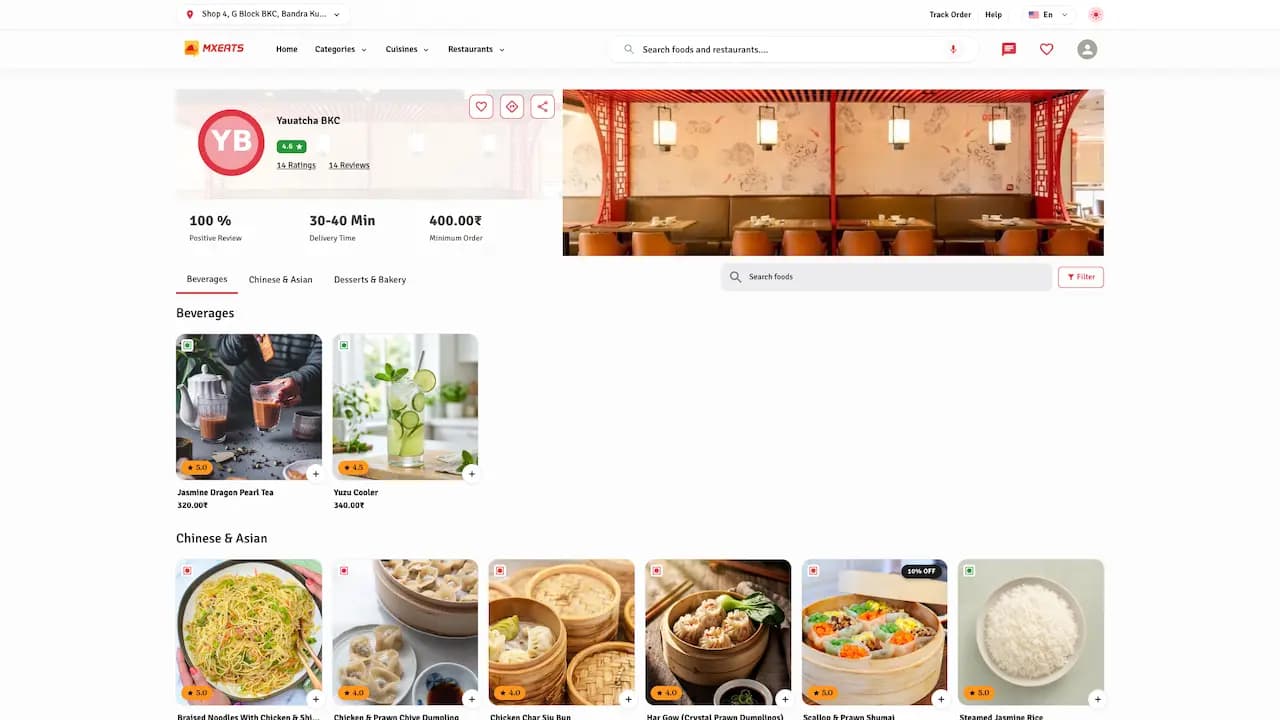
Each restaurant gets its own branded web and in-app presence, because diners order from the restaurant, not your directory.
Automated monthly billing with plan tiers, proration, and failed-payment recovery, the revenue engine of the model.
Restaurants keep their customer lists with one-click export, the trust promise that closes sales against commission marketplaces.
Own-staff runs, pickup, and network-driver runs interleave on the same order flow, chosen order by order.
Order flow priced without per-order platform fees, with processing costs handled transparently.
The unifying trait is a relationship with restaurants: whoever has their trust can move their ordering direct.
Several locations see the fastest payback, because every order moved in-house saves commission immediately and compounds monthly.
Single-location restaurants escaping marketplace dependence in their neighborhood, with tools that make direct ordering stick.
Deploying a branded channel across the network, with per-location menus and one franchise-wide loyalty program.
Bundling direct ordering with existing point-of-sale offerings, adding recurring SaaS revenue to an installed base.
Selling the platform as a white-label service to restaurants in their region, earning predictable subscription revenue instead of commissions.
Built for the commission-free model, not adapted from a marketplace.
Customers order direct from the restaurant they want.
First-party delivery on the restaurant's terms.
The owner's console, not a vendor queue.
Your SaaS operations console.
Four consoles, one view of the platform's subscriber base, fulfillment, and revenue position.
The restaurant onboarding workflow, plan-tier administration, entitlement rules, and churn-risk queues from the prediction model, so the subscriber base is managed as a book of accounts rather than a vendor list.
Plan pricing and billing cycles, mixed commission accounts where kept, payment-processing margins, add-on pricing, and billing statements, all editable without a code release and all visible to the restaurants paying them.
Driver-network monitoring, per-restaurant delivery-mode configuration, cash-handling limits, and dispute resolution, so the mixed fulfillment model stays reliable whichever mode a restaurant runs.
Churn and usage analytics, order and payment reporting per restaurant, settlement and payout reporting, and finance reconciliation across subscription, commission, and add-on revenue lines.
The commission-free journey, from branded storefront to monthly invoice.
The customer orders from the restaurant's own branded presence, not a marketplace directory, which is what keeps the relationship first-party.
Payment processes without a per-order platform fee, and processing costs are handled transparently per the operator's configuration.
The owner's console takes intake directly, with the customer record and order history written to the restaurant's own CRM, exportable on demand.
The restaurant fulfills with its own staff, pickup only, or the platform's driver network, chosen order by order from the panel.
Stamps and promo codes accrue to the restaurant's own program, and reorder favorites keep frequency inside the direct channel.
Instead of a commission, the restaurant's flat SaaS subscription bills automatically, with proration and failed-payment recovery built in.
Five model-driven systems working the same order stream. Each ships pre-tuned for direct ordering and sharpens as your data compounds.
Learns when each restaurant's customers actually order and schedules campaigns and offers for those windows.
Order timing, campaign opens, redemptions, daypart patterns
Higher campaign conversion without bigger discounts
Analyzes item-level performance to show which dishes drive margin and which quietly cost kitchens money.
Item sales, margin data, order modifiers, seasonality
Menus curated on data, raising average ticket margin
Adapts stamps and offers per diner from order history, concentrating incentives on the visits that build frequency.
Order history, reward redemptions, visit intervals
Higher repeat rates per diner at lower incentive cost
Flags restaurants whose order volume is drifting down, so your team intervenes before a subscription cancels.
Order volume trends, login activity, campaign usage
Lower subscriber churn and steadier SaaS revenue
Ranks restaurants and dishes per diner from favorites and time of day, so the direct channel is faster than the marketplace habit.
Order history, favorites, location, time of day
More orders pulled into the direct channel
Four groups, each mapped to the promise the SaaS model makes to a restaurant.
Each restaurant carries its own branded ordering surface with real indexable routes for organic search, per-outlet menus for multi-location brands, and franchise head-office controls, so the channel is visibly theirs.
Order and customer records live in the restaurant's account with CRM-style profiles, one-click export, and campaign tooling funded by the restaurant or the operator with recorded contribution splits, so the relationship stays theirs.
Own-staff delivery, pickup with the built-in till for counter and phone orders, or the platform's driver network, chosen order by order, so the platform serves restaurants as they actually operate.
Plan tiers with configurable pricing and billing cycles, automated billing with proration and dunning, churn prediction, and billing statements, so the subscription relationship is engineered rather than invoiced by hand.
platform concepts
The economic concept is substitution: revenue comes from a predictable monthly subscription instead of a percentage of orders, so billing automation, plan tiers, proration, and dunning are product features rather than finance chores.
Customer data ownership is the trust concept. Order and customer records belong to the restaurant account with one-click export, which is the specific promise that closes sales against commission marketplaces, and it is enforced in the schema rather than by policy.
Mixed fulfillment is the operational concept. Own-staff runs, pickup, and network-driver runs can be interleaved on the same order flow, so a restaurant can start pickup-only and adopt delivery without changing platforms.
insight
The direct-ordering model monetizes a different truth of this industry: restaurants resent commission marketplaces but pay reliably for software that brings orders back in-house. Industry commentary has documented the commission revolt across markets for years, and the winning substitute has been SaaS: a flat monthly fee that costs less than the commission on a week of orders, with the customer relationship staying with the restaurant.
The platform-side consequence is that revenue becomes recurring and predictable rather than transactional, and the mixed model, subscription for some restaurants and commission for others, lets you price each account by what it will bear. The revenue table below quantifies the lines a commission-free platform earns.
Flat monthly SaaS subscriptions per restaurant, tiered by feature set, the core revenue line in this model.
Optional payment-processing margin on card transactions, disclosed and configured per market.
Premium add-ons: marketing campaigns, CRM exports, and photo menu services.
Driver-network fees where restaurants use your delivery fleet instead of their own staff.
No per-order commission is the selling point to restaurants, and the admin panel makes subscription tiers, add-ons, and billing cycles fully configurable.
Six monetization lines across the platform, quantified against published industry benchmarks. Every rate is configurable in your admin panel; the figures here are modelling inputs, not projections of your platform's earnings.
| Criteria | Revenue line | How it is charged | Typical range | What sets the ceiling |
|---|---|---|---|---|
| Restaurant SaaS subscriptions | Flat monthly plans per restaurant, tiered by feature set with billing cycles and entitlements you define | Direct-ordering platforms commonly charge $50 to $300 per month per location | Plan value. The pitch closes when the fee is visibly less than the commission the restaurant pays today | |
| Mixed commission accounts | Per-order commission kept enabled for restaurants that prefer marketplace economics | Commonly 5% to 15% where kept, well below aggregator rates | Account choice. Running both models side by side lets every restaurant pay the way it prefers | |
| Payment-processing margin | A disclosed margin on card transactions, configured per market | Commonly a fraction of a percent above cost | Transaction volume. The line scales with orders while staying honest on statements | |
| Driver-network fees | Per-run fees where restaurants use your delivery fleet instead of their own staff | Contract-specific per market | Fleet utilization. The network earns only when restaurants want the flexibility, so reliability decides the line | |
| Premium add-ons | Marketing campaigns, CRM exports, photo menu services, and loyalty tooling sold per restaurant | Contract-specific per add-on | Restaurant ambition. Add-ons monetize the marketing work restaurants want done for them | |
| Placement and discovery services | Optional paid placement in the platform home feed, offered without distorting organic discovery | Contract-specific per placement | Restraint. Direct-ordering platforms monetize placement lightly, because the catalog's neutrality is part of the pitch |
Standard inclusions on every engagement, almost-ready or custom. Nine things you never have to ask for.
The complete unencrypted codebase transfers to you, with documentation and deployment scripts.
Your logo, colors, and store accounts across all four panels, plus branded storefronts per restaurant.
App store and Play Console submissions handled end to end, with production monitoring switched on.
Stripe, PayPal, and regional gateways configured, with subscription billing, proration, and dunning built in.
Send-time optimization, menu insights, and loyalty personalization arrive configured for direct ordering, not as raw APIs.
Languages, currencies, and tax display configured for your markets during the launch window.
Containerized services on AWS or Azure with autoscaling and queue-backed order intake for meal-rush traffic.
Churn and usage analytics, finance reconciliation views, and CSV exports so your operations team starts informed on day one.
Included support window plus product updates covering bug fixes, OS compatibility, and version upgrades.
Direct ordering means the restaurant's reputation rides on your stack.
Subscription management with plan tiers, proration, and dunning built in, so SaaS revenue is automated rather than tracked in a spreadsheet.
Order and customer data stays exportable per restaurant, the core promise of the direct model, enforced in the schema.
Optional driver-network dispatch that restaurants can mix with their own staff per order.
Containerized services with autoscaling. For marketplace-style economics instead, see our marketplace app development track.
POS systems, email and SMS providers, accounting exports, and analytics ship as configured integrations, so the platform plugs into tools restaurants already run.
Role-based access, append-only audit logs, encrypted traffic and secrets, and rate-limited endpoints come standard, with customer-data export enforced at the schema level.
The almost-ready AI build, day by day. Store review can add a short buffer outside our control.
Subscription tiers, target restaurant profile, and any driver-network plans locked with a written scope, and your identity applied across all panels.
Billing plans, payment processing, notification flows, and marketing tools configured and tested against your live accounts.
First restaurant accounts created with branded storefronts, menus, and hours, then test orders run covering pickup, first-party delivery, and subscription billing.
App store submissions with review buffers accounted for, production monitoring on, and full launch with post-launch support and product updates included.
Both tracks ship the same direct-ordering core. The difference is time, price structure, and how much you want to change.
| Criteria | Almost-Ready AI Launch | Custom Build |
|---|---|---|
| Time to live | 6 working days from branding handoff | 3 to 4 weeks, scoped before work starts |
| Pricing | Fixed written quote after a short scoping call, no hourly meter | Estimated per module after the discovery call |
| Source code and IP | 100% ownership on delivery | 100% ownership on delivery |
| AI layer | Send-time optimization, menu insights, and loyalty personalization pre-tuned for direct ordering | AI services designed around your workflows and data |
| Revenue model | SaaS subscription billing configured out of the box | Custom billing, tiers, and enterprise contracts to your spec |
| Best for | Operators who want to launch this quarter | Teams with bespoke workflows or a unique model |
| After launch | Post-launch support and product updates included | Post-launch support and product updates included |
$ moxace launch --nowBook a walkthrough and we will demo branded storefronts, billing, and the marketing tools on a live build, then send the written scope.
Share your idea
a quick call, no deck required
See the live demo
every screen, admin to user
Launch with source
full code, your brand, your servers
No two direct-ordering platforms price the same. These are the factors that shape the written quote you receive after scoping.
The direct-ordering core ships standard. Custom commission-free plans, marketing tools for restaurant groups, or branded native apps are estimated per module.
Direct-delivery zones defined by each restaurant, pickup-first configurations, and language settings are configured per vendor market.
Each restaurant's own POS and payment account connects during onboarding, and per-vendor integration effort is estimated individually.
Discovery and forecasting models are pre-tuned. Adapting them to a commission-free, direct-ordering funnel is a separately scoped workstream.
Each ships as an optional module on the same order core, scoped separately.
Deeper counter and phone-order recording so offline and online sales live in one operational record, with POS hardware integrations scoped as needed.
Email and SMS campaign tooling with send-time optimization sold as a premium add-on, monetizing the marketing work restaurants want done for them.
Head-office controls across a restaurant estate with per-outlet menus, hours, and reporting, sold as an enterprise tier of the same platform.
App-store listings per restaurant brand where accounts want their own presence, with release management handled as a service.
Wallet, cash on delivery with operator-controlled limits, and split-tender reconciliation for markets where payment habits are mixed.
Ready-made speed with custom-build engineering discipline.
Subscription billing, data ownership, and mixed fulfillment are core product logic, not marketplace features with commissions hidden in settings.
A ready-made launch costs a fraction of a ground-up build, with a fixed written quote before work starts.
One hundred percent of the source code transfers to you. No royalty structures, no black-box dependencies.
Prefer marketplace economics? Our food delivery app development team can help you compare models.
Canonical deployments from our own portfolio. Metrics are reported from live platforms, not projections.
A food delivery platform operating across a dense multi-cuisine market, with AI-assisted dispatch and live order tracking at consumer scale.
A high-traffic consumer platform our team ships and operates at national-carrier scale, the same bar every build is held to.
A brand-engagement platform from the same engineering system, proving consumer experiences hold attention at global-brand scale.
A SaaS platform holds restaurant revenue data and subscriber billing. The controls are built in, and stated plainly.
Order and customer records belong to the restaurant account with one-click export, so the data-ownership promise survives personnel, policy, and platform changes alike.
Subscriptions bill on schedule with proration and dunning, and billing statements record plan charges and activity, so the platform's income reconciles without manual invoicing.
Promotions funded by the operator or by restaurants record contribution splits, so settlement always reflects who actually paid for the discount.
Cards, wallets, cash on delivery with operator-controlled limits, and split tender reconcile against each order, so no payment mode becomes an accounting gap.
The home feed and paid placement are operator-configured with the organic catalog protected, because the direct model's credibility depends on a fair shelf.
the process
We start with a discovery call about your restaurant network and order flow, then send a written scope and fixed quote. After brand handoff we configure menus, pickup logic, payments, and any own-rider delivery settings. The almost-ready AI build goes live in 6 working days; a custom build takes 3 to 4 weeks, planned with you up front.
Post-launch you have 60 days of support and 12 months of updates. The first 90 days are about shifting order habits: promoting the direct channel inside the restaurant, on packaging, and through staff, because the software works from day one and adoption is the metric that decides the savings.
Open the web app, sign in with the printed demo credentials, or install the Android build — no signup, no sales call. What you see is what you launch.
$ moxace launch --nowBook a free consultation and get a fixed quote.
Share your idea
a quick call, no deck required
See the live demo
every screen, admin to user
Launch with source
full code, your brand, your servers
Moxace is an independent software development company. We are not affiliated with, sponsored by, or endorsed by ChowNow.
The phrase “ChowNow clone” is used descriptively. It is how the software industry refers to building a platform with similar functionality, and how buyers search for one.
The design and codebase are built entirely by our in-house team. Nothing is taken from the ChowNow website, applications, or brand assets.
ChowNow and all third-party names and marks remain the property of their respective owners, referenced here only to describe the category of software we build.
Read the full legal notice on our disclaimer page.