Mid-term inventory engine
Room- and bed-level availability with minimum-stay rules, check-in day constraints, and gap-night detection.
AI-Built Habyt Clone
An AI-first build of every Habyt mechanic: occupancy forecasting that sees vacancies weeks out, dynamic pricing tuned to stay length and season, and matching that pairs applicants with rooms they will renew. Four synced panels ship white-label with 100% source code, owned by you from day one. The almost-ready AI build goes live in 6 working days; a custom build takes 3 to 4 weeks.
Launch-ready from
$4,299
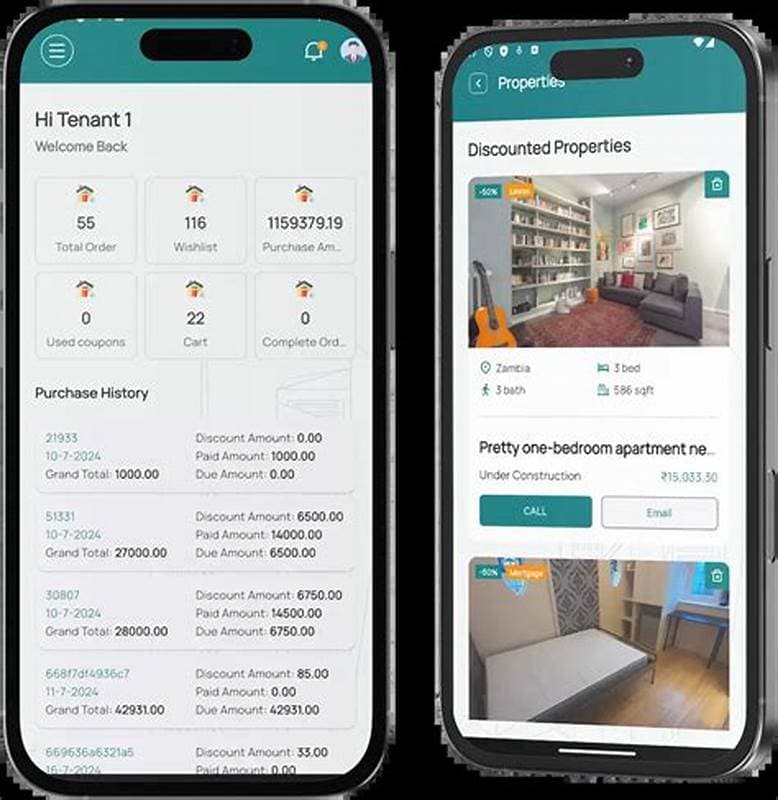
Synced Panels
Almost-ready AI launch
Custom build
Source-code ownership
Trusted by the brands we build for



Canonical facts, not promises.
overview
A mid-term rental platform handles furnished stays of roughly one to twelve months, sitting between nightly bookings and annual leases. The Habyt-style model rents rooms and units in shared and private formats at all-inclusive monthly prices, aimed at remote workers, relocators, and corporate stays.
The purpose is to make flexible living operable at scale. Operators need room-level inventory, monthly billing with bundled utilities, contracts without annual lock-in, and constant turnover management, and the platform is what turns that into a repeatable business. The model earns because mid-term rates per room exceed hotel costs for the guest while beating annual-lease revenue for the operator.
A complete build includes the guest app, a host and operator panel, a corporate booking portal, and an admin console, over contract, billing, and housekeeping engines built for monthly cycles rather than nightly ones.
Flexible and mid-term living has grown with remote and hybrid work and with corporate relocation demand, though the market is fragmented across cities and operators of very different sizes. Treat any headline market figure as directional; the structural fact is that operators with real software outgrow those running on spreadsheets.
The headline layer above the panels.
Room- and bed-level availability with minimum-stay rules, check-in day constraints, and gap-night detection.
Rolling projections by city and building from confirmed bookings, pipeline requests, and seasonality.
Monthly rates adjusted for stay length, season, and demand, with suggested prices operators accept or override.
E-signed agreements, deposits, recurring monthly charges, and prorated extensions generated from the lease record.
Booking events cascade into housekeeping, inspection, and restocking tasks with SLA timers and photo proof.
Employer-managed booking rules with budget caps, cost centers, and consolidated invoices.
Check-in instructions, lock codes, and building rules released automatically after identity verification.
Self-serve extension requests with availability checks and prorated billing approved in one tap.
What these buyers share: room-level inventory worth filling and a reason real software beats spreadsheets.
Replacing fragmented tooling with one platform that handles contracts, billing, and operations across cities.
Converting units to flexible terms without losing control of occupancy, payments, or the tenant relationship.
Launching a flexible-stay brand city by city on white-label foundations instead of custom builds.
Serving employer clients with approval flows, budget caps, and consolidated invoicing built in.
Delivering the platform as a branded product to clients, since every panel ships in every build.
Four panels, one platform. Every build ships all of them.
The booking experience for remote workers and relocators.
Multi-unit operations under control.
For employers and relocation teams buying stays in volume.
Network-level control across cities.
Four consoles, one view of the network's rooms, stays, and revenue.
City and building onboarding with room-level inventory trees, minimum-stay rules and check-in day constraints, gap-night detection, and content and CMS controls across the network.
Pricing rules per season and stay length, AI occupancy and demand dashboards by city, building, and room, and dynamic rate suggestions operators accept or override per unit.
Housekeeping and turnover scheduling with SLA monitoring, maintenance task tracking, damage and deposit tracking, and occupancy forecasting that feeds turnover crews weeks ahead.
Commission and partner setup, guest verification configuration, corporate booking policy with approval flows and budget caps, and revenue and occupancy dashboards per market.
From application to renewal for one-to-twelve-month stays.
Relocators and remote workers filter by neighborhood, furnished status, and move-in date across shared and private options.
The applicant submits profile details and screening consent; house rules and inclusive pricing are visible before they commit.
Screening results trigger approval, and a mid-term contract with e-signature locks the dates and monthly rate.
Recurring charges cover rent and utilities as a single invoice, autopaid against the resident's ledger.
Amenity bookings, cleaning requests, and house communications run through the resident app during the stay.
As the term ends, the resident extends in one tap or books a checkout inspection, freeing the space for the next applicant.
Five model-driven systems working the same stay stream. Each ships pre-tuned for mid-term operations and sharpens as your data compounds.
Projects occupancy by city, building, and room from the booking pipeline so turnover teams and pricing act weeks ahead.
Confirmed bookings, pipeline requests, seasonality, churn history
Vacancy seen coming instead of discovered after month-end
Suggests monthly rates by stay length, season, and demand, which operators accept or override per unit.
Booking curves, length-of-stay outcomes, seasonality, local demand
Revenue per room that tracks the market without underpricing
Ranks rooms per applicant from preferences and renewal history so the placements that stick surface first.
Applicant profiles, room attributes, renewal outcomes
Fewer early terminations and higher renewal rates
Flags residents unlikely to renew so retention offers and unit re-marketing start before the term ends.
Engagement, payment behavior, tenure, support signals
Extensions captured instead of vacancies absorbed
Forecasts turnover workload from the booking pipeline so cleaning crews are scheduled to actual need.
Checkout calendar, turnover SLAs, crew capacity
Ops teams sized to demand instead of firefighting
platform concepts
The first concept is the contract model. Mid-term stays live between hotels and annual leases, so terms are flexible with monthly billing cycles, inclusive utility pricing, and exit terms that are explicit rather than implied. The tenancy record carries all of it in one place.
The second is membership-shaped economics. Residents pay a recurring invoice that bundles rent, utilities, and services, and the ledger separates what is rent revenue from what is pass-through cost, so margins per room and per property stay visible and admin-configurable.
The third is the room-level catalog. Buildings, units, and rooms live in a structured inventory tree with minimum-stay rules, check-in day constraints, and gap-night detection, while the application-to-move-in pipeline is tracked as a funnel. A week of vacancy on a monthly rate costs what a hotel night would, so utilization is engineered, not hoped for.
Four groups, each mapped to the part of the flexible-living promise it protects.
City and neighborhood search with furnished status and move-in date filters, all-inclusive pricing display, minimum-stay date logic, virtual tour embeds, and instant-book versus request flows for relocators and remote workers.
E-signed agreements with deposits and recurring monthly charges bundled with utilities, prorated extensions approved in one tap, late-fee management, and a ledger separating rent revenue from pass-through cost.
Co-living community features with social spaces and events, amenity bookings, housekeeping and maintenance requests submitted and tracked from the resident app, and AI-driven roommate matching for shared spaces.
Guest verification configuration before move-in, check-in instructions and smart-lock access codes released automatically after identity verification, house rules attached to the tenancy record, and damage and deposit tracking.
Nightly or monthly margins built into all-inclusive pricing, with seasonal and length-of-stay multipliers set per city.
Corporate contract revenue from bulk and relocation bookings at preferred rates.
Extension and upgrade fees: parking, cleaning packages, and premium units sold as add-ons.
Partnership commissions from serviced-office providers, relocation agencies, and insurance partners.
Every rate and rule is admin-configurable, so you can tune pricing per market and season without a code release.
insight
Flexible and co-living housing keeps expanding as remote and hybrid work make one-to-twelve-month stays the fastest-growing slice of rental demand according to widely published industry analyses, with serviced apartment and co-living operators expanding city by city. Mid-term economics live between hotels and annual leases, and the operator who fills rooms predictably wins.
The wedge for a new entrant is utilization engineering: room-level inventory with minimum-stay rules, gap-night detection, and turnover automation, priced with length-of-stay multipliers so occupancy stays dense without underpricing. Corporate approval flows add the high-value buyer. The revenue table below quantifies the lines.
Six monetization lines across the platform, quantified against published industry benchmarks. Every rate is admin-configurable; the figures here are modelling inputs, not projections of your platform's earnings.
| Criteria | Revenue line | How it is charged | Typical range | What sets the ceiling |
|---|---|---|---|---|
| All-inclusive rent margins | Monthly rates bundling rent, utilities, and services | Serviced co-living rents commonly $800 to $3,000+ per month per room | Occupancy. Utilization engineering is the whole margin | |
| Length-of-stay premiums | Multipliers by stay length and season on the monthly rate | Premium of 10% to 40% for shorter or peak-season terms | Demand shape. Pricing earns while flexibility stays attractive | |
| Corporate contract revenue | Preferred-rate bulk and relocation bookings | Commonly 5% to 15% margin on consolidated invoices | Contract volume. Corporate accounts fill rooms mid-week and mid-season | |
| Extension and upgrade fees | Parking, cleaning packages, and premium units sold as add-ons | Flat fees per service or per extension | Stay quality. Add-ons sell where residents see value daily | |
| Partnership commissions | Referrals from serviced-office providers, relocation agencies, and insurers | Referral fees commonly 5% to 15% of first-term value | Partnership quality. Referrals earn where move-ins convert | |
| Deposit and late-fee policy | Deposits held per contract and late fees per policy | Deposits typically one month's rent; fees admin-set | Policy design. Fees protect operations without pricing out residents |
Standard inclusions on every engagement, almost-ready or custom. Nine things you never have to ask for.
The complete unencrypted codebase transfers to you, with documentation and deployment scripts.
Your logo, colors, and store accounts across all four panels, plus branded guest communications.
App store and Play Console submissions handled end to end, with production monitoring switched on.
Stripe, PayPal, and regional gateways configured for monthly billing, deposits, and add-on charges.
Occupancy forecasting, dynamic pricing, and matching arrive configured for mid-term stays, not as raw APIs.
Languages, currencies, and tax display configured for your markets during the launch window.
Containerized services on AWS or Azure with multi-city data handling and role-based access.
Occupancy dashboards, revenue reports, and CSV exports so your operations team starts informed on day one.
Included support window plus product updates covering bug fixes, OS compatibility, and version upgrades.
Where generic scripts fail and we spend our effort.
Room- and bed-level availability with minimum-stay rules, check-in day constraints, and gap-night detection, so mid-term calendars behave correctly where nightly-booking scripts fail.
E-signed agreements, deposit handling, recurring monthly charges, and prorated extensions generated from the lease record, not spreadsheets.
Stripe, PayPal, and regional gateways covering monthly autopay, deposits, and add-on charges with reconciliation tooling.
Housekeeping and maintenance tasks generated from booking events with SLA timers and photo completion proof.
Containerized services on AWS or Azure with multi-city data handling and role-based access. For a nightly-stay sibling, see our Airbnb-style app track.
Corporate systems, smart-lock providers, and channel sync ship as configured integrations, while identity verification, role-based access, and audit trails come standard, so compliance questions have answers before they are asked.
The almost-ready AI build, day by day. Store review times can add a short buffer outside our control.
Cities, inventory structure, and pricing policy locked with a written scope, and your identity applied across all four panels.
Payments, contracts, minimum-stay rules, and smart-lock providers configured and tested against your live accounts.
Buildings, units, and rooms imported with media and calendars, then a live test stay: booking, contract signing, payment, access handoff, extension, checkout.
App store submissions with review buffers accounted for, production monitoring on, and full launch with post-launch support and product updates included.
Both tracks ship the same mid-term core. The difference is time, price structure, and how much you want to change.
| Criteria | Almost-Ready AI Launch | Custom Build |
|---|---|---|
| Time to live | 6 working days from branding handoff | 3 to 4 weeks, scoped before work starts |
| Pricing | Fixed written quote after a short scoping call, no hourly meter | Estimated per module after the discovery call |
| Source code and IP | 100% ownership on delivery | 100% ownership on delivery |
| AI layer | Occupancy forecasting, pricing, and matching pre-tuned for mid-term stays | AI services designed around your workflows and data |
| Inventory model | Room- and bed-level calendars engineered in | Plus custom corporate integrations and contract packs |
| Best for | Operators who want to launch this quarter | Teams with bespoke workflows or a unique model |
| After launch | Post-launch support and product updates included | Post-launch support and product updates included |
$ moxace launch --nowBook a walkthrough and we will demo a booking, the forecasting dashboards, and turnover ops on a live build, then send the written scope.
Share your idea
a quick call, no deck required
See the live demo
every screen, admin to user
Launch with source
full code, your brand, your servers
No two launches price the same. These are the factors that shape the written quote you receive after scoping.
The almost-ready AI build covers the proven feature set. Corporate system integrations or city-specific contract templates add scoped estimate work.
Inventory structure, language packs, and currency setups are configured per market. Adding cities means more configuration, never a rebuild.
Smart-lock providers, corporate systems, and channel sync are wired during the build, and each integration is estimated individually.
Out of the box, forecasting and pricing models are pre-tuned for mid-term demand. Training on your booking history is an optional, separately scoped workstream.
Extend the Habyt-style build once the core book-to-live loop is running.
Keyless entry and IoT-powered security tied to the tenancy record, with access codes released automatically after identity verification.
AI-driven compatibility matching for shared spaces from lifestyle and preference data, filling shared units faster and cutting early terminations.
Scheduled cleaning and upkeep bundled into the membership invoice, with SLA timers and photo proof on every turnover.
Social spaces, resident events, and networking features in the resident app, the co-living glue that drives renewals and referrals.
Multi-region and multi-currency support for international listings, relocation pipelines, and cross-border contracts under one platform.
Deploy the platform for coliving brands and franchise networks under their own identity, with per-tenant pricing rules and commission configuration.
Ready-made speed with operator-grade engineering.
Minimum-stay logic, monthly billing, and turnover ops are core product logic, not nightly-booking hacks.
A ready-made launch costs a fraction of a ground-up build, with a fixed written quote before work starts.
One hundred percent of the source code transfers to you. No per-booking royalties, no vendor lock-in.
Booking, verification, and operations patterns drawn from 9,000+ delivered projects. For a fleet-based sibling, see our Blueground clone track.
Canonical deployments from our own portfolio. Metrics are reported from live platforms, not projections.
A consumer platform from the same engineering system, proving operational matching at multi-market scale.
A high-traffic consumer platform our team ships and operates at national-carrier scale, the same bar every build is held to.
An on-demand mobility platform from the same engineering system, proving the matching core under city-wide load.
Tap a card to see how the platform defends its stays.
Terms, inclusive utilities, exit clauses, deposits, and billing all live on one tenancy record, so disputes reference a single source of truth instead of scattered emails and spreadsheets.
Recurring invoices bundle rent, utilities, and services while the ledger separates rent revenue from pass-through cost, so margins per room are visible and residents see what they pay for.
Check-in instructions and smart-lock codes release automatically only after identity verification clears, and house rules attach to the contract, so keys never arrive ahead of trust.
Occupancy forecasting projects by city, building, and room from the booking pipeline, and churn prediction flags residents unlikely to renew, so retention offers start before the term ends.
Booking events cascade into housekeeping, inspection, and restocking tasks with SLA timers and photo proof, so a checkout at noon means a bookable room by the evening.
Employer-managed booking rules with budget caps and cost centers gate every corporate reservation, and consolidated invoices reconcile against the approval flows that authorized them.
the process
You begin with a discovery call covering cities, inventory structure, and pricing policy, and you receive a written scope and fixed quote before work starts. Once you approve, you hand over your brand assets and we configure the platform: your identity across all four panels, your payment and contract flows, and your minimum-stay rules. The almost-ready AI build goes live in 6 working days; a custom build takes 3 to 4 weeks, planned with you up front.
Launch is not the finish line. You get an included support window and product updates, and the first 90 days are a utilization push: filling calendars with mid-term demand, tuning minimum-stay and gap-night rules, proving that turnover teams hit their SLAs, and converting first corporate contracts. Revenue depends less on raw traffic and more on occupancy discipline, and the platform makes that discipline measurable.
Open the web app, sign in with the printed demo credentials, or install the Android build — no signup, no sales call. What you see is what you launch.
Access: Shown on request
Access: Given during a call
$ moxace launch --nowBook a free consultation and get a written scope and price.
Share your idea
a quick call, no deck required
See the live demo
every screen, admin to user
Launch with source
full code, your brand, your servers
Moxace is an independent software development company. We are not affiliated with, sponsored by, or endorsed by Habyt.
The phrase “Habyt clone” is used descriptively. It is how the software industry refers to building a platform with similar functionality, and how buyers search for one.
The design and codebase are built entirely by our in-house team. Nothing is taken from the Habyt website, applications, or brand assets.
Habyt and all third-party names and marks remain the property of their respective owners, referenced here only to describe the category of software we build.
Read the full legal notice on our disclaimer page.